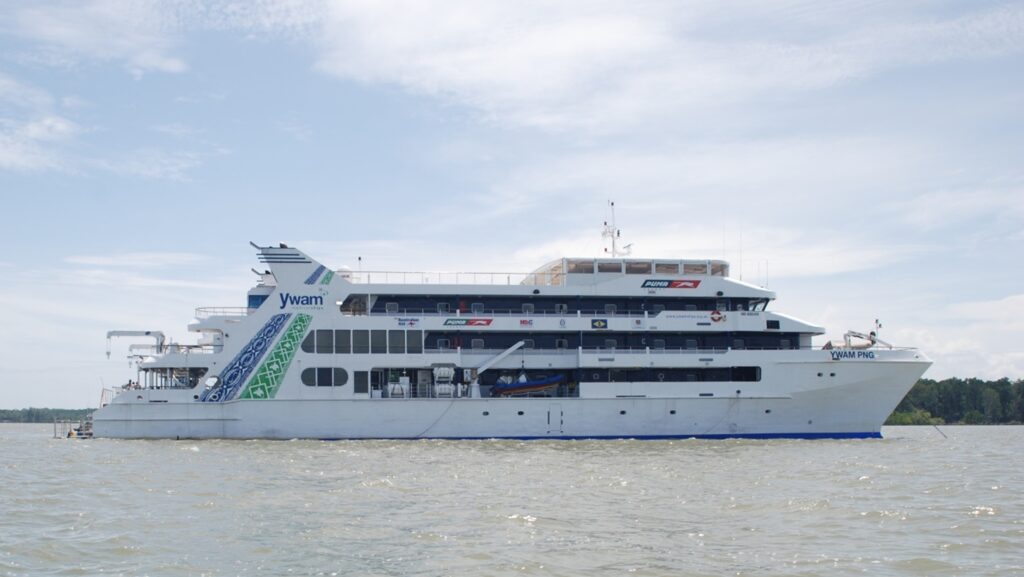
Ports are essential infrastructure that provide entry to countries via waterways. Port facilities are used to receive passengers and cargo. There are between 800 and 1400 major ports around the world. Passenger entries through ports, including cruise ships, is low (estimated at 5% of global total) with most passengers entering countries by air (~60%). However, cargo shipments through ports accounts for more than 80% of global trade volume. Given the high volume of ship traffic into ports, consideration needs to be given into the contaminants introduced by vessels and port operations.

Vessel Wastewater
There are three main types of wastewater released by cargo vessels:
- Black/grey water: Vessels generate wastewater similar to domestic sources – blackwater from toilets and greywater from showers, sinks and laundries. Black and grey water is often treated onboard prior to release or stored onboard prior to treatment at shore reception facilities. The latest generation of cruise ships have advanced onboard wastewater treatment systems (membrane bioreactors and multi-barrier disinfection) to treat black and grey water. Treated effluent still has discharge limitations, needing to take place a certain distance from land and usually when the vessel is under way.
- Bilge water: bilge water is the water that collects at the lowest part of the vessel. This water contains a range of contaminants including oil and grease, heavy metals, chemicals and microorganisms. When in port, bilge water can either be treated prior to disposal or processed at approved onshore treatment facilities.
- Ballast water: ballast water is taken on by cargo ships to improve the balance, trim and stability of the vessel. The water is often taken on in one port and then discharge in another port during cargo loading. Ballast water often contains a wide variety of contaminants including sediments, bacteria, viruses and exotic species not endemic to the port where it is discharged.
Vessels can also introduce a range of contaminants directly to the water depending on the nature of their cargo. For example, iron ore ports will generally have a high level of dissolved iron in the surrounding water due to the uncovered piles of minerals held at port prior to loading.

Wastewater from Port Operations
Port operations will produce its own wastewater
- Cargo washdown activities: Incoming cargo will be inspected and washed down to ensure no introduction of foreign material beyond the port. This water will contain a range of chemicals, hydrocarbons and microbiological material.
- Wastewater from maintenance activities: Vessel repair (such as hull cleaning and engine servicing) will produce its own stream of wastewater. This water will be high in sediment and oil and grease.
- Black/grey water: Personnel onsite will produce black and grey water that needs to be collected and treated. This water will be high in detergents, pathogens, fats and organic material.
- Stormwater run-off: stormwater will flush whatever contaminant is on the surface of the hardstand areas into a stormwater collection system or straight back to sea. The contaminants present in this water will depend on what is on the hardstand at the time of first flush.
Historically, PFAS containing firefighting foams were also disposed of in harbour waters due to the available infrastructure. The persistent chemicals are often found in groundwater sources close to disposal sites. These sources of wastewater around port facilities means that the local water contains a wide variety of contaminants (in addition to the high salinity level of ocean water).

Remote port water treatment
Even with ocean currents and vessel traffic, the water surrounding ports will often be contaminated with microbiological material, hazardous chemicals, salt, oil and grease and sediment. This is not an issue for ports with a ready supply of potable water piped to site. However, for remote ports, the water surrounding water represents the most consistent source of water that can be treated to create a site supply of freshwater.
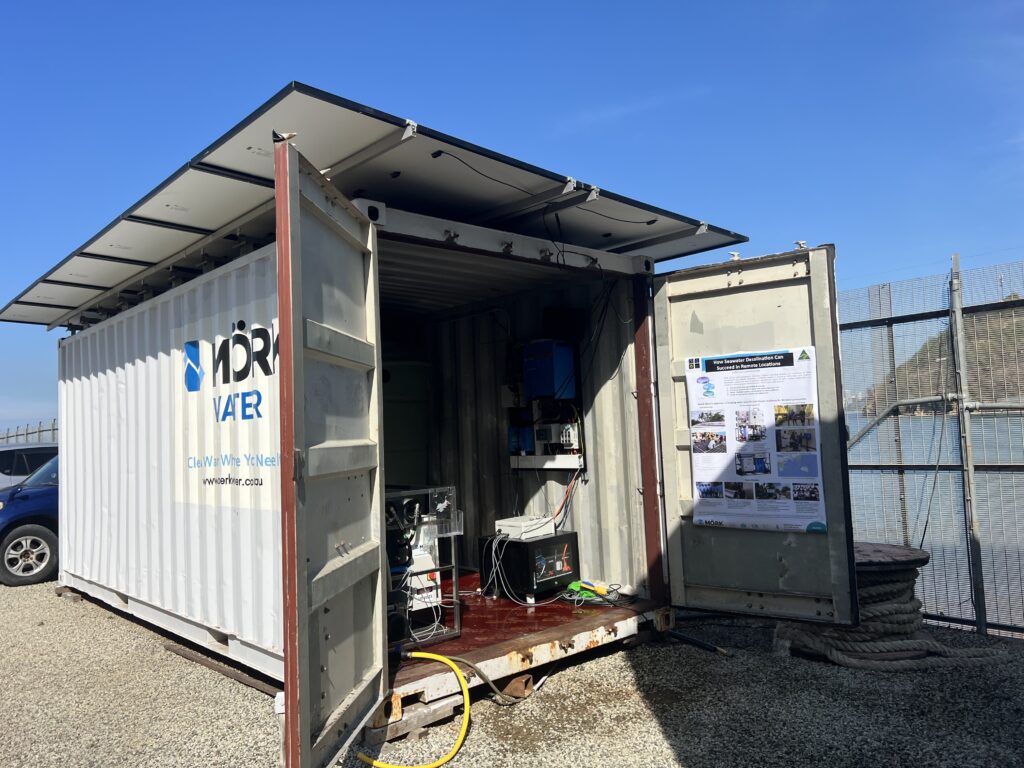
Many remote ports will rely on a combination of rainwater and carted water to secure their water supply. Carted water, particularly to remote regions, is a more expensive option compared with site based water treatment. Decentralised site based water treatment gives ports the ability to produce water on demand. It will also give ports a firmer understanding of the ongoing financial cost of port operations.

Port Water Treatment Technology
Gaining a thorough understanding of the composition of the water around a port is essential. It is important to see how it changes over time to create a robust and reliable treatment system. Port water treatment systems will generally be a combination of absorption, desalination, filtration and disinfection. Treatment systems exist to reliably treat each of these contaminants. Examples include membrane filtration, carbon absorption, onsite generation of chlorine and ceramic ultrafiltration.
Moerk Water are experts at producing clean water where you need it. Contact Moerk Water today to discuss your port water treatment needs.